ADVANCED DIAGNOSTIC IMAGING
Veterinary Ultrasound Services
Get clear, real-time insights into your pet's health. We provide non-invasive, stress-free ultrasound imaging for fast and accurate diagnoses.
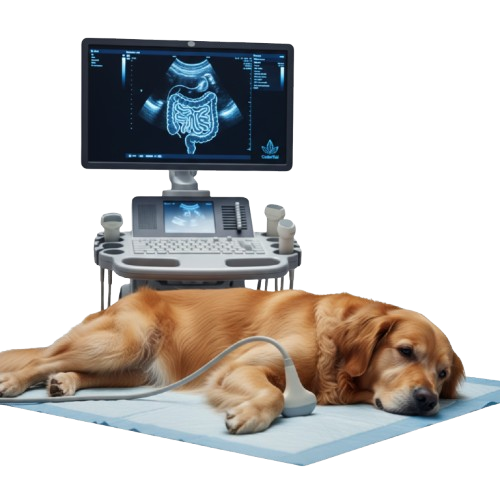
At CedarTail Veterinary Hospital, we offer comprehensive medical veterinary ultrasound services for dogs and cats. Our advanced imaging technology helps us provide accurate diagnoses and the best possible care for your pets. We work with Board-Certified Radiologists to ensure the highest quality diagnostic imaging.
Call (408) 372-5811Abdominal Ultrasound
Investigates bladder, bowel, reproductive organs, kidneys, adrenal glands, spleen, pancreas, stomach, liver, gallbladder, bile ducts and much more.
Echocardiogram / Diagnostic ECG
A detailed investigation of the heart structure and function when heart disease is suspected. ECG investigates heart rhythm and electrical activity.
Thyroid Ultrasound
Evaluates the thyroid gland, surrounding lymph nodes and lumps in the neck, helping with differentiation and diagnosis.
Ocular Ultrasound
Used to evaluate intraocular and orbital disease. Often used to rule out posterior segment diseases such as retinal detachment and masses.
Musculoskeletal Ultrasound
Evaluates shoulders, including infraspinatus muscle, supraspinatus muscle and tendons, biceps, triceps, elbow joint, carpal joints, ligaments, and menisci.
Comprehensive Care
All ultrasound services are performed with the highest standards of care, ensuring accurate diagnoses and comfortable experiences for your pets.
Understanding Ultrasound
Diagnostic Ultrasound
Diagnostic ultrasounds can reveal soft tissue structures that may not be visible on radiographs. We commonly use abdominal ultrasound to identify masses, investigate abdominal pain, and evaluate organ size, density, and other abnormalities.
Preparation Required: 8-12 hours of fasting is typically needed, depending on the medical case. We will shave a small area to receive the clearest diagnostic image quality. Complete abdomen hair shave may be required for optimal ultrasound results.
Safety of Diagnostic Ultrasound
Because ultrasound uses no radiation, there are no direct risks to your pet from the procedure itself. Your pet will need to fast for 8-12 hours and lie comfortably on their right or left side during the examination.
Echocardiograms
An echocardiogram is a specialized ultrasound of the heart. While X-rays show the heart's silhouette, echocardiograms reveal the thickness of heart walls, internal structures, heart function, and blood flow through the heart chambers.
This detailed information helps us determine if your pet has mild or severe heart disease, whether the condition is improving or worsening, and assess anesthesia risks for other procedures.
Light sedation may be recommended for larger dogs or nervous pets to ensure optimal image quality. Complete chest hair shave is typically required for echocardiograms.
Echocardiogram Safety
Echocardiograms are very safe procedures that typically take 15-30 minutes. A small area of hair is clipped. If light sedation is needed, there are minimal risks associated with sedatives. Mild sedation may be recommended to ensure patient comfort and accurate measurements.
Ultrasound-Guided Procedures
Centesis Procedures
Ultrasound-guided centesis procedures involve the precise insertion of a needle or catheter into a body cavity or organ under ultrasound guidance. This technique ensures accuracy and reduces the risk of complications. Common ultrasound-guided procedures include:
Abdominocentesis
Purpose: Removal of fluid from the abdominal cavity.
Uses: Diagnostic analysis for infection, cancer, or blood. Therapeutic relief of abdominal distension.
Thoracocentesis
Purpose: Removal of fluid from the pleural cavity surrounding the lungs.
Uses: Diagnostic analysis and therapeutic relief of respiratory distress.
Pericardiocentesis
Purpose: Draining fluid from the pericardial sac around the heart.
Uses: Treatment of pericardial effusion to relieve pressure on the heart.
Cystocentesis
Purpose: Sterile collection of urine directly from the bladder.
Uses: Diagnostic testing for urinary tract infections and other bladder conditions.
Fine Needle Aspiration (FNA)
Purpose: Used when there are changes in organ texture that require cellular analysis.
Fine needle aspiration uses ultrasound guidance to insert a thin needle into organs or masses (liver, spleen, pancreas, kidney, prostate) to collect cell samples for diagnostic evaluation.
Potential Complications
• 2-3% of patients may experience mild bleeding requiring monitoring
• About 8% of large, deep-chested dogs can develop pneumothorax (air in chest)
• Careful monitoring ensures any complications are managed quickly and effectively
Core Biopsy
Core biopsy is recommended for masses where fine needle aspiration doesn't provide sufficient diagnostic information. This procedure is the gold standard for diagnosing certain cancers. Results typically available in 5-7 days. Post-procedure monitoring may be required.
Schedule Your Pet's Ultrasound
Our compassionate team is ready to provide the advanced diagnostic care your pet needs. Contact us today to schedule an ultrasound appointment.
Call (408) 372-5811